
Toptal, AI Engineer Team Project
AI Labelling & Annotation Platform
Designed an enterprise AI annotation platform that clients could configure and run entirely on their own.
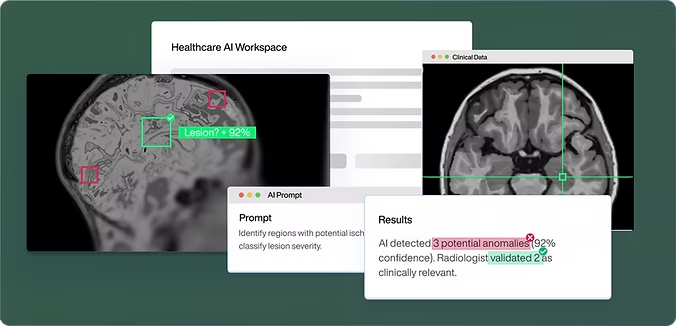
Project Detail
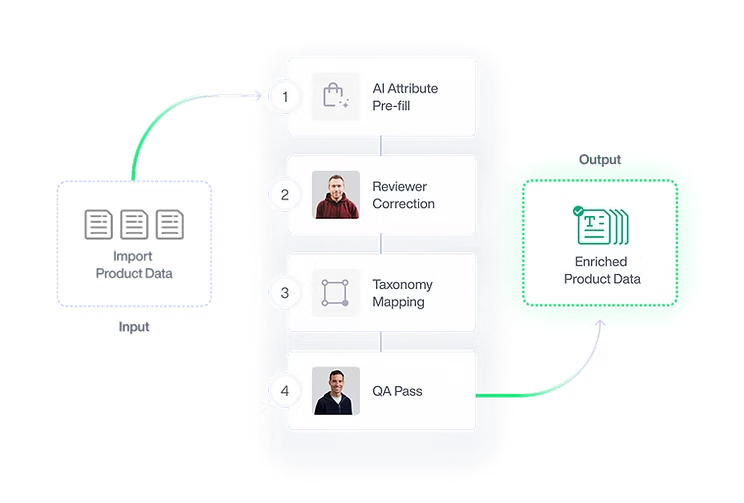
Toptal built an AI annotation platform that enterprise clients could configure and run entirely on their own. The platform had to serve two very different audiences at once: clients (product managers, data scientists, ML engineers) who design and manage annotation pipelines, and annotators (expert crowd workers with widely varying technical skill) who perform the labelling itself. The core challenge was designing a single coherent product that felt effortless for both. As Lead UX Designer, I owned the full product experience, from project creation and workflow setup to the annotation interfaces, qualification testing, QA, billing, and results export.
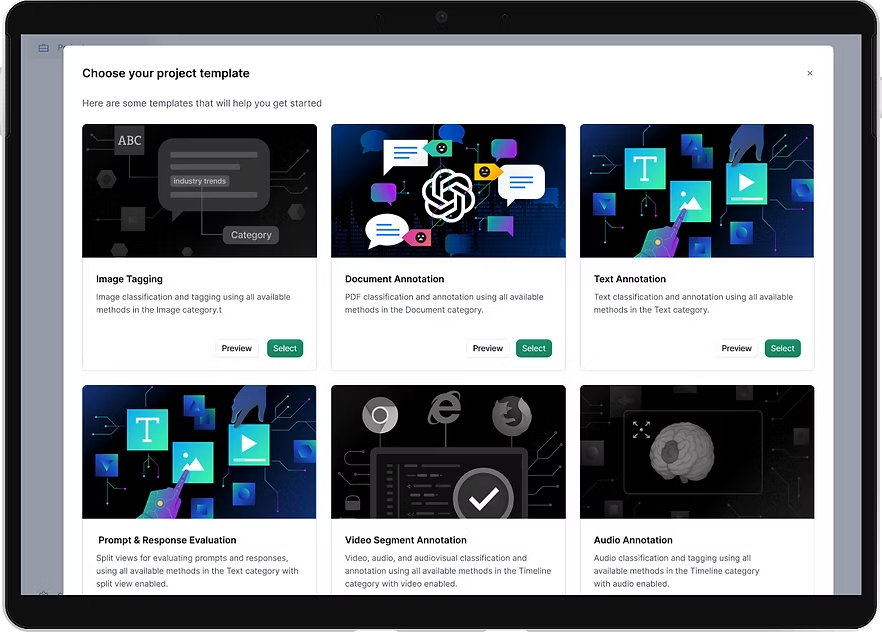
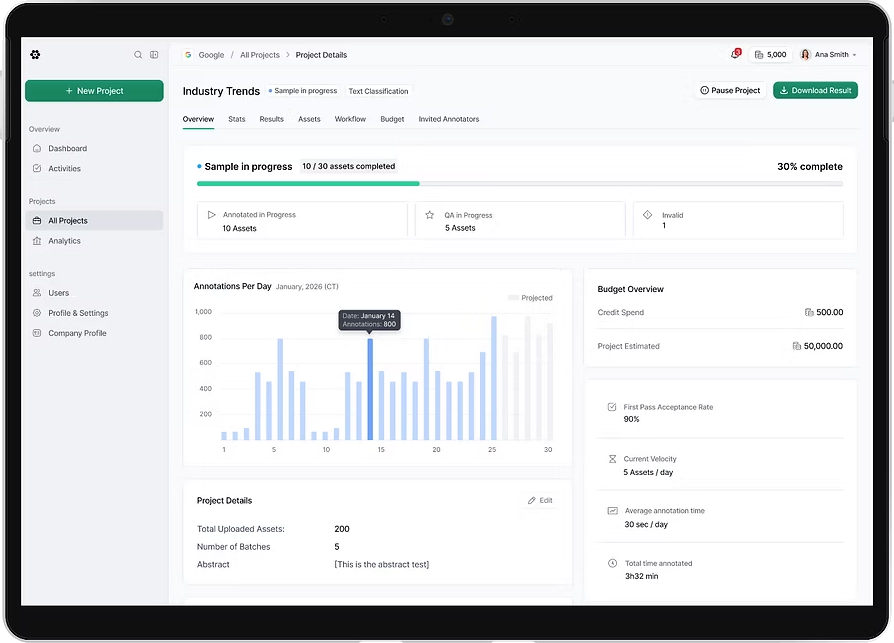
Client App: Project Configuration
The design challenge wasn't just making complex workflows manageable, it was making them self-serve. PMs and data scientists needed to launch annotation projects without having to loop in an engineer for every detail. I designed a guided project setup wizard that walks clients through defining tasks, building a label taxonomy, configuring multi-stage workflows, and setting a budget, all before a single annotation begins. A pre-launch budget estimator and consolidated payment flow removed the cost uncertainty and scattered friction that had plagued the original setup experience. Result: clients could go from project idea to a live annotation pipeline in a single focused session.
Design Process
This engagement demanded a lean, iterative approach from day one. Rather than lengthy spec documents, we ran structured requirement workshops to align on scope, then moved quickly into prototype cycles where the UI became the spec. Requirements evolved through the work itself: each round of screens surfaced new edge cases and product decisions, resolved in real time rather than deferred. That pace kept the product moving and the team aligned.
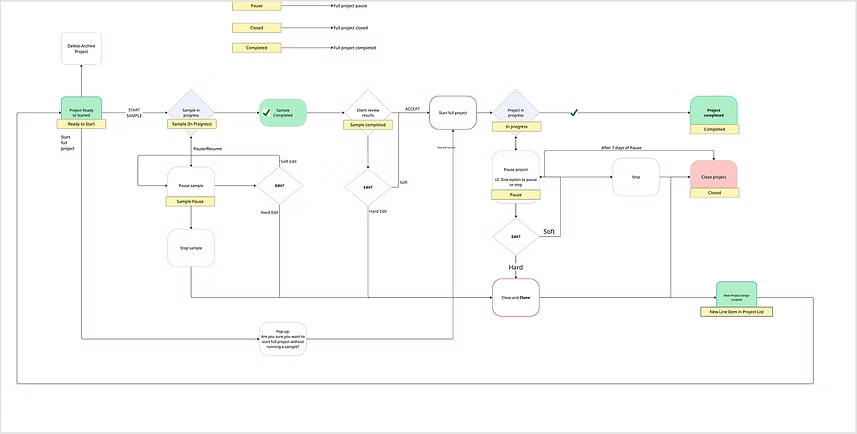
Talent App: Annotation Flow
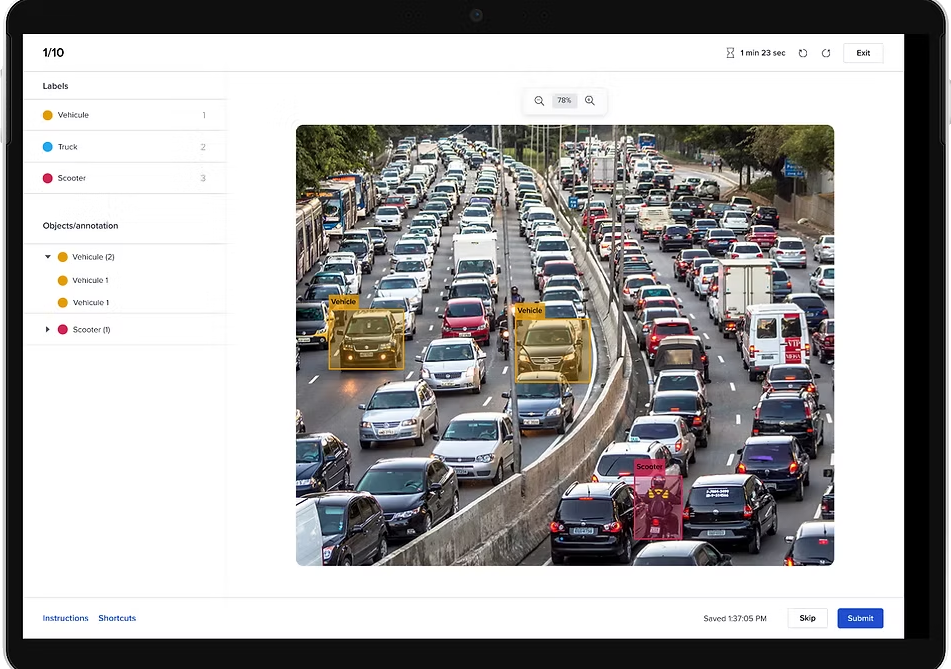
The annotation interface had to work equally well for expert ML practitioners and novice crowd workers, a harder design problem than it sounds when the task complexity ranges from simple image tagging to multi-span relationship annotation. I designed a focused, task-by-task interface that surfaces only what annotators need in the moment: the asset, the tools, and the label set. Strong progress indicators and auto-save support long annotation sessions without cognitive overhead. Relationship annotation, linking two spans or objects, was redesigned from a keyboard shortcut into a fully visual interaction, making it accessible to any skill level without slowing down power users. Qualification testing was built with inline pass/fail feedback that gates annotators into projects automatically, removing manual client review from the process entirely.
More work
DoorDash
Designing an Intuitive POS App for Food Delivery Operations
View case studyCirque du Soleil
Design Ticket Purchase Experience
View case studyVIA Rail Canada
Redesigning VIA Rail's Reservation System
View case studyUQAM | Université du Québec à Montréal
App Design: Interactive Audio-Visual Experience for University Educators
View case studySequel.io
Designing a B2B Dashboard and Event Detail View for a Live Event Platform
View case study